One Remarkable Trick You Can Teach Your Cat
Yes! You can teach your house cat new tricks.
 Explore Your Neighborhood
Yes! You can teach your house cat new tricks.
Most people think cats do what they want, when they want, and only if it somehow benefits them personally. To be fair, cats have done very little over the years to correct that impression. But as many amazed viewers have seen from talented performing cats, felines can absolutely learn tricks. The key is not forcing them, repeating commands louder, or expecting them to respond like dogs. Cats generally learn best through positive reinforcement—rewarding the exact behavior you want, right when it happens. Feline veterinary guidance also emphasizes using rewards the individual cat actually values, such as treats, play, catnip, or petting, and keeping the experience low-stress.
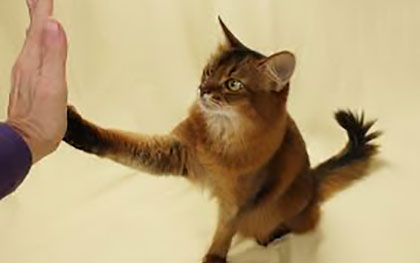
For most cat owners, one of the best tricks to start with is “high five.” It is cute, impressive, and easier than many people think. Cat training experts note that a clicker can work like a marker, helping the cat understand the exact moment they did the right thing. In the case of high five, the goal is to reward the instant the cat lifts or touches with a paw.
Here is the basic method. First, choose a reward your cat loves and reserve it for training. Then hold a treat near your cat so they become interested. Many cats will naturally lift a paw or reach toward your hand. The moment that paw moves upward or touches your fingers, mark it with a clicker—or a short, consistent word such as “yes”—and immediately give the treat. Repeat this several times so your cat begins to connect paw movement = reward. Because cats have short attention spans, training sessions should stay brief—generally just a few minutes at a time.
Once your cat starts offering the paw on purpose, make your hand more upright so it resembles a true high five. Then begin adding the cue, such as “high five,” right before presenting your hand. After enough repetition, many cats learn that touching your hand with their paw is the winning move. The secret is timing and consistency. Reward the behavior you want every single time at first. Do not punish, scold, or drag the cat’s paw into place. Feline behavior guidance recommends encouraging desired behavior and redirecting or ignoring unwanted behavior rather than using verbal or physical punishment.
The biggest mistake people make is assuming the cat is being stubborn when it is actually confused, distracted, or no longer interested. Cats usually respond best when they are calm, a little hungry, and working in a quiet environment. Positive reinforcement training should also be done when the cat is healthy and not showing fear or distress.
The good news is that success does not require a stage, a spotlight, or a professional animal trainer. It just requires patience, good timing, and a reward your cat thinks is worth the effort. So yes—your cat may ignore you when you ask for many things. But with the right method, there is a very good chance she can learn at least one trick that will make visitors smile every time. And once a cat learns one, you may be surprised what comes next.